Sustainable nature conservation at a local level: the Karwendel Nature Park
Since 2026, ADLER has been a partner of the Karwendel Nature Park and supports several projects in the fields of species conservation, climate research and environmental education. In this interview, Managing Director Anton Heufelder introduces the Karwendel Nature Park and its key areas of work.
24 Mar 2026


How is the Karwendel Nature Park organised?
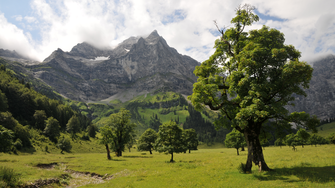
The Karwendel Nature Park covers almost the entire Karwendel mountain range and, at around 739 km², is the largest protected area in Tyrol and the largest nature park in Austria. It stretches from Innsbruck to Lake Achensee and boasts an exceptionally high level of natural beauty, featuring primeval forests, wild rivers, alpine meadows and traditional alpine pastures. The nature park is managed by a supporting association comprising local authorities, tourism associations, the Austrian Federal Forestry Office, the Chamber of Agriculture, the two Alpine Clubs and the Province of Tyrol. Its work is divided into five key areas: nature conservation, recreation && tourism, environmental education, regional development, and knowledge && research.
How does a nature park differ from a national park?
A nature park such as the Karwendel is a large-scale protected area where nature conservation and sustainable use are considered together. It is about both the preservation of the natural and cultural landscape and nature-friendly recreation, education and regional value creation. At its core are nature reserves, which primarily serve to protect nature from harmful human influences. These are designated where nature remains largely untouched or where rare species and communities of animals and plants occur in particular diversity. Surrounding them – acting as a kind of buffer – are landscape conservation and quiet zones. Here, the cultural landscape maintained by humans through agriculture and forestry predominates. A national park pursues the goal of ‘letting nature be nature’ even more rigorously; large parts of it are free from human use to allow natural processes to unfold with as little interference as possible. The Karwendel Nature Park, by contrast, combines conservation, the maintenance of traditional alpine and cultural landscapes, research and a carefully managed visitor experience, for example through huts, trails, information services and visitor centres.
What are the main tasks of the Karwendel Nature Park?
The tasks of the nature park can be divided into four main areas: nature conservation, recreation && tourism, environmental education and knowledge && research. In the area of nature conservation, the focus is on protecting wild rivers such as the Isar and Rißbach, preserving old mixed mountain forests, moorland and rocky habitats, as well as the unique cultural landscapes around the Großen and Kleinen Ahornboden. In the recreation && tourism sector, we provide visitor information and guidance through our nature park visitor centres and engage with visitors both on-site and in digital form via our rangers. In this way, we strive to combine an immersive experience of nature with the greatest possible protection of sensitive habitats. The environmental education sector comprises guided excursions, nature park schools, educational programmes for children, young people and adults, themed nature trails, and programmes that combine experiencing nature with an understanding of ecological interrelationships. In the field of knowledge &, and research, the nature park collaborates with universities and specialist institutions on topics such as biodiversity, forest development, aquatic ecology, and climate change, and carries out monitoring of animal and plant species as well as visitor data.
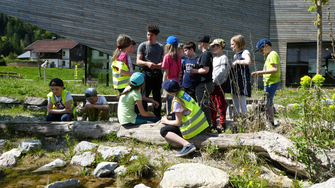
Environmental education for children and young people is a particular priority.
Environmental education is a key area of focus because long-term nature conservation can only succeed if people understand why landscapes, biodiversity and natural processes are worth protecting. By raising awareness at an early age – particularly through school programmes, excursions, Junior Ranger activities and nature park days – an emotional connection to nature and the nature park ‘on our doorstep’ is fostered, which we hope will later manifest itself in responsible behaviour. In the Karwendel in particular, with its popular excursion and leisure areas, environmental education helps to defuse conflicts over land use: those who know why wildlife quiet zones are important, why alpine pastures need to be maintained, or how sensitive wild rivers are to disturbance, behave more considerately in the countryside. Furthermore, environmental education strengthens the local population’s identification with the nature park and fosters understanding for conservation and management measures.
How do you strike a balance between tourism and agricultural use on the one hand, and nature conservation on the other?
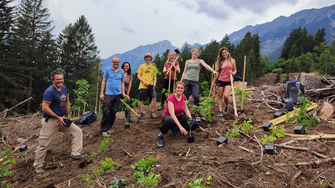
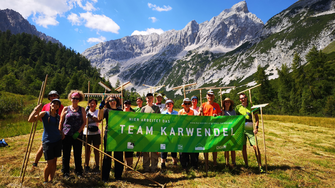
In the Karwendel Nature Park, differing interests clash very tangibly in our valleys, on the alpine pastures, along the trails and at popular spots. This is precisely where our management approach comes into play. Our approach is to consider conservation, use and the visitor experience as a unified whole, and to bring together the many stakeholders – from local authorities and land managers to tourism partners and volunteers – within a shared nature park concept. A key tool is visitor management: our rangers, digital offerings such as outdoor platforms, as well as traditional information boards, campaigns and environmental education programmes all work together to encourage visitors to adopt nature-friendly behaviour, starting with their tour planning and continuing once they are out in the field. At the same time, we consciously support traditional alpine farming and forestry, as adapted management practices preserve the cultural landscape and keep important habitats open. Through projects such as ‘TEAM Karwendel’, we involve volunteers in alpine pasture and biotope management, thereby providing additional support for land managers and ecosystems. Monitoring projects and digital visitor data help us to closely observe developments in the nature park and continuously adapt our measures. In this way, the ‘balancing act’ between conservation, use and visitor experience becomes an ongoing management process that we actively shape as a nature park.
Support, for example with alpine pasture management, also comes from the ‘TEAM Karwendel’ volunteer project.
Alpine pastures have shaped the Karwendel landscape for centuries and are also valuable habitats for numerous animal and plant species. As part of “TEAM Karwendel”, 120 to 130 volunteers support alpine pasture maintenance every year by clearing scrub, removing stones and large boulders, maintaining fences or clearing hay meadows. If alpine pastures are no longer managed, they gradually become overgrown with scrub and forest, species-rich meadows are lost, and the characteristic, open landscape also changes significantly. Alpine pasture management therefore contributes to the preservation of biodiversity, the traditional cultural landscape and agricultural use, whilst at the same time strengthening mutual understanding between nature conservationists and land managers.
The same applies to forestry. What are your priorities in this area?
In certain areas, the nature park focuses on forest areas that are not managed, or only very extensively, and where natural processes take precedence. Over time, such forests develop into structurally rich, near-natural stands with varying age classes, a high proportion of deadwood, and clearings— and edge zones, as well as numerous small-scale habitats required by rare and specialised species – such as certain beetles, fungi or cavity-nesting bird species. These forests serve as reference sites where natural forest development, the effects of climate change and biodiversity can be studied. At the same time, they fulfil important functions such as erosion control, water retention and avalanche prevention, thereby increasing the resilience of the mountain landscape to natural hazards.
Various projects and collaborations within the nature park are investigating the impacts of climate change on the region. What is the main focus here?
Among the most significant impacts are rising temperatures, changes in precipitation patterns, more frequent extreme events such as heavy rain, drying stages or storms, as well as shifts in habitats and altitudinal zones – or rather, thermal zones – to higher elevations. To prepare the region, adaptation strategies are being developed, for example through site-specific forest management, the promotion of resilient, structurally rich mixed forests, and the safeguarding of migration corridors for species. The tourism sector is also addressing these changing conditions. Research, monitoring and dialogue with land managers, local authorities and the public play a central role in identifying risks at an early stage and implementing appropriate measures.
What does climate change mean for the forests in the Karwendel Nature Park?
Alpine mountain forests are particularly challenged by climate change because they serve many functions simultaneously: protection against natural hazards, habitat, timber supply and recreational space. Specific threats arise from higher temperatures, changes in snowfall and snow cover, more frequent extreme weather events, drought stress, and a potential increase in pests and diseases. Ideally, the mountain forests in the Karwendel will develop into stable, structurally rich mixed forests with high biodiversity and varying age classes, combining a wide variety of tree species and genetic diversity within a small area. Such near-natural, well-mixed forests are more resilient to disturbances, can adapt better to changing climatic conditions and, at the same time, retain their protective and recreational functions for people and nature.
The forests are also important for biodiversity. What role does this play in the nature park’s overall concept?
The Karwendel Nature Park is home to an exceptionally high level of biodiversity, with over 1,300 plant species and more than 3,000 known animal species, including species of European significance such as the golden eagle, white-backed woodpecker, common sandpiper and Alpine longhorn beetle. Biodiversity is the foundation of stable ecosystems; it enables adaptation to changes such as climate change and ensures long-term benefits such as clean water, protection against natural hazards, fertile soils and attractive recreational areas. Projects such as species conservation measures, the maintenance and connectivity of habitats, the creation of stepping-stone biotopes, or the promotion of traditional land-use practices in alpine pasture and forest areas help to preserve endangered species and facilitate animal migration. Such measures combine practical nature conservation with educational and research aspects, and highlight the value of biological diversity to the public.
The Karwendel is a popular destination for day trippers and recreational sports enthusiasts. What do you expect from visitors?
As a nature park, we would like to see, above all, considerate behaviour that is respectful of nature. This includes our rules of conduct: stay on marked paths, respect wildlife quiet zones and restricted access times, take your rubbish away with you, keep dogs on a lead, avoid noise, and take particular care in sensitive areas such as riverbanks, moors and young woodland. Anyone visiting the Karwendel can also actively contribute to its conservation – for example, by using public transport or a combined train-and-bus journey, planning trips carefully to avoid particularly sensitive periods, such as during the wildlife’s winter hibernation, and by supporting local businesses and nature park initiatives. Such behaviour reduces the strain on nature and infrastructure whilst simultaneously boosting regional economic activity and acceptance of nature conservation measures.
Thank you very much for talking to us!

© by adler-lacke.com